
Blog | 23 September 2026 | 3 min read
The local maximum fallacy of AI
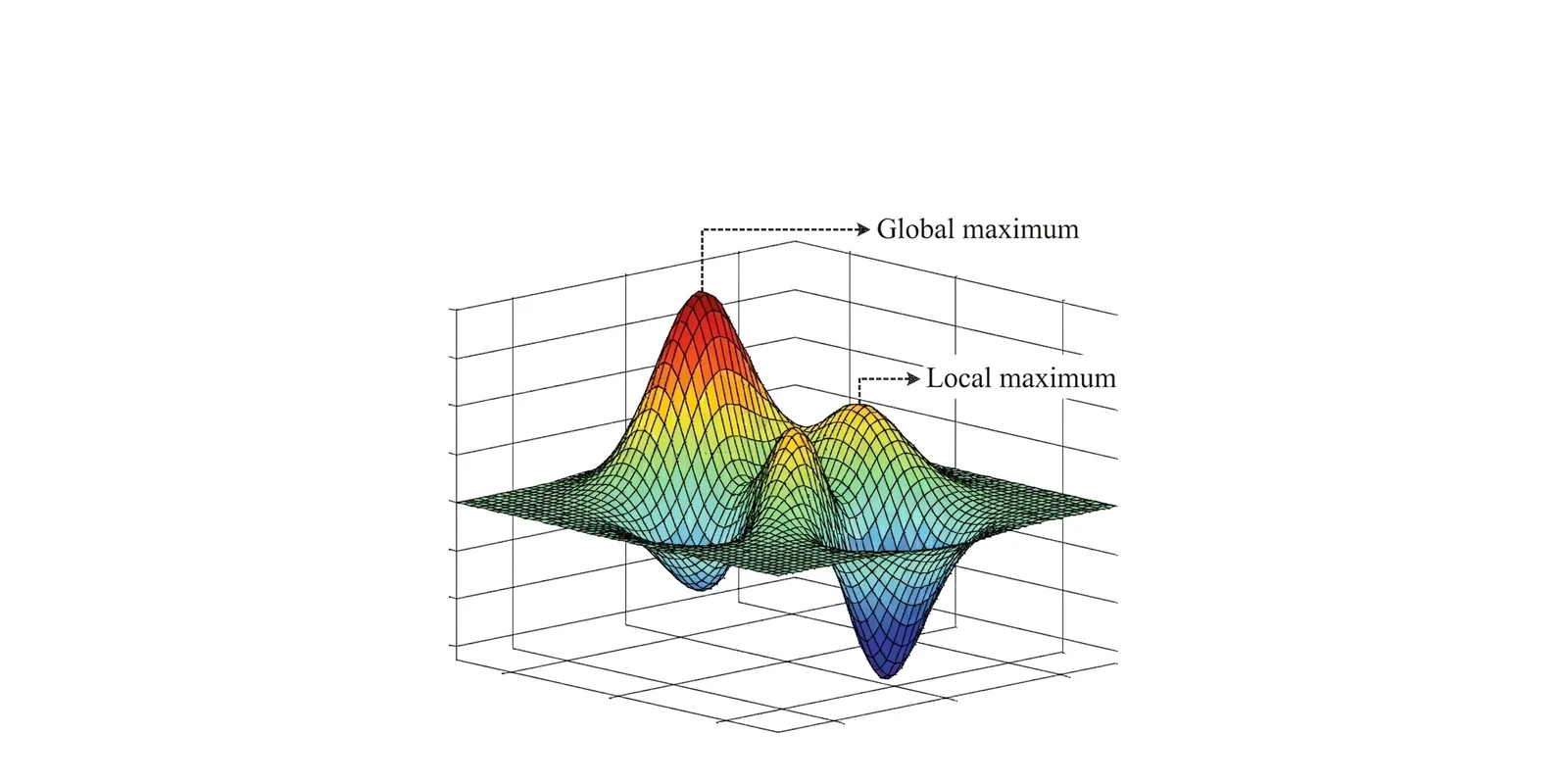
Getting everyone on ChatGPT or Claude creating projects and skills might sound productive, but you're probably just duplicating work that should sit at a department level. This article covers the local maximum fallacy of AI.
A few weeks ago, I started to see employees within the same department create the exact same project instructions and skills inside ChatGPT.
They were all extremely excited by their new ability to write proposals in ‘their’ way.
Individually, they felt like good work had been done, and they were now more productive.
But that wasn’t the case.
If you zoom out, the same 6 members of staff have now each spent 1 hour creating the same skill to achieve the same goal.
But if one single skill was created by one individual and passed to the whole department, the same outcome would’ve been reached 83% faster.
That is what we call the ‘local maximum fallacy of AI’. A misleading idea that your individual productivity is the same as the department’s productivity.
People who build things with AI on their own optimise for the local maximum. You, as a company and as a department, need to look for the global maximum.
Why it happens
The bigger you are, the more fragmented your usage. ChatGPT or Claude used by individuals then gives you local maximums, and the global maximum stays out of reach.
People might be building the same thing. Two people in the same department solve the same problem twice, and neither knows the other did.
Scattered software leads to scattered AI usage, unless you audit, ideate and build the new workflow.
Do not be fooled by AI progress from people building things here and there. You might be optimising for the local maximum instead of the global maximum.
When you hear about an AI win, ask yourself: did a process change, or did one person get faster?
A faster person is a local maximum. That is good, and it is still a long way from a transformed department.
The solution: map the workflows
To avoid these local maximums, you need to break the silo, and you need to gather everyone in one room to work on one thing.
You need to map things out.
Map the workflow from start to finish. What programs are used, who owns the data. What data storage is essential. What goes wrong, what’s costly. All of this is important to lay out. In our 2-day training program, we help you do this, creating a ‘Department blueprint’ by the end of the first day.
By bringing everybody together, you have an opportunity now to transform your processes.
Mapping shows you the duplicate builds, and it shows where one workflow can serve a whole department.
The goal is to pick the workflows that are costly, long, tied to a key business outcome, or done at high volume, 100 or more times a year. A task done four times a year is not worth automating. For those, you can continue to just use ChatGPT and ask questions.
Who you need to help
A client recently referred to us as ‘AI ninjas’.
I’d be lying if I said we’re proficient in martial arts, but the premise of fitting into the natural nooks and crannies of a company is valid. You need someone with flexibility to do the mapping of an entire department or sub-department.
Different types of AI ninjas help you do this: in-house AI engineers, and external consultants who also build.
This is the work we do at AlphaX. We train teams to think about global maximums, and get them to build agents too.
If you are not sure you are at that stage yet, start with What AI should I buy?
If you’re ready, book a free consultation call with us.
Sakky Baral · AlphaX Intelligence